← Back to work

Product vision and market prioritization

Two parallel research tracks: the ideal concept for the AI assistant, and a quantitative model for prioritizing sectors. I led both as the responsible designer, partnering with the CEO, then cross-referenced the results to expose where the vision and the market disagreed.

Note: the data and decisions involved are part of the company's strategy. To preserve confidentiality, this case study describes generic processes and omits internally defined data and strategy.

Product strategyMarket research
Product vision and market prioritization

The problem

The company discussed product and market with two different rulers. Vision stalled on technical limitations before the ideal was even defined, and sector choice happened by intuition or by whoever showed up first. Without a shared vocabulary, every conversation restarted from zero, and neither discussion could challenge the other.

Design decisions

Separating what AI should be from what it can do today

I structured the vision into combinable capability pillars, not features. That let us design the ideal concept first and only then check feasibility — instead of letting technical constraints prune ambition before it existed. The cost was keeping two living artifacts instead of a single roadmap.
Mapping where AI fails, not just where it works

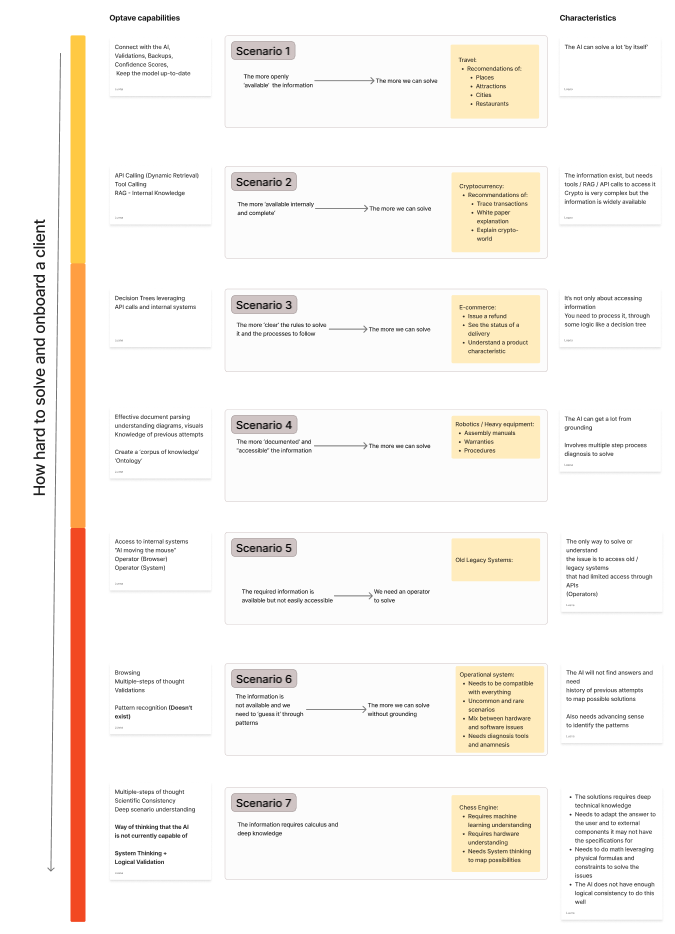
I classified application domains by what the AI needs to solve the problem — from reasoning over public data to parsing deep technical documentation — and explicitly marked the point where current technology falls short. Recording the limit protects the team from promising what the product can't deliver, even at the cost of a less ambitious sales narrative.

Scale of scenarios from easiest to hardest for AI to solve, Scenario 1 through 7
Difficulty scale — from the simplest scenario to one requiring deep reasoning and human validation

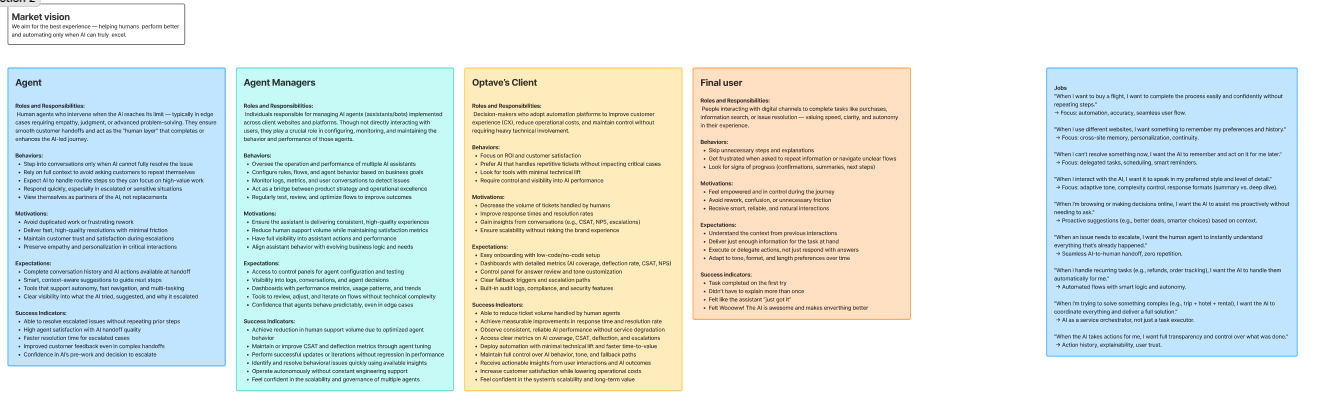
Articulating value separately for the buyer

Every scenario was written with resolution and impact segmented by actor: end user, human agent, manager and buyer. The split exists because whoever pays is almost never whoever uses — and a scenario that delights the end user may say nothing to whoever signs the contract.

Market vision map segmented by actor: agent, agent manager, client and final user
Value articulated by actor — agent, manager, buyer client and end user

Market analysis as an auditable model

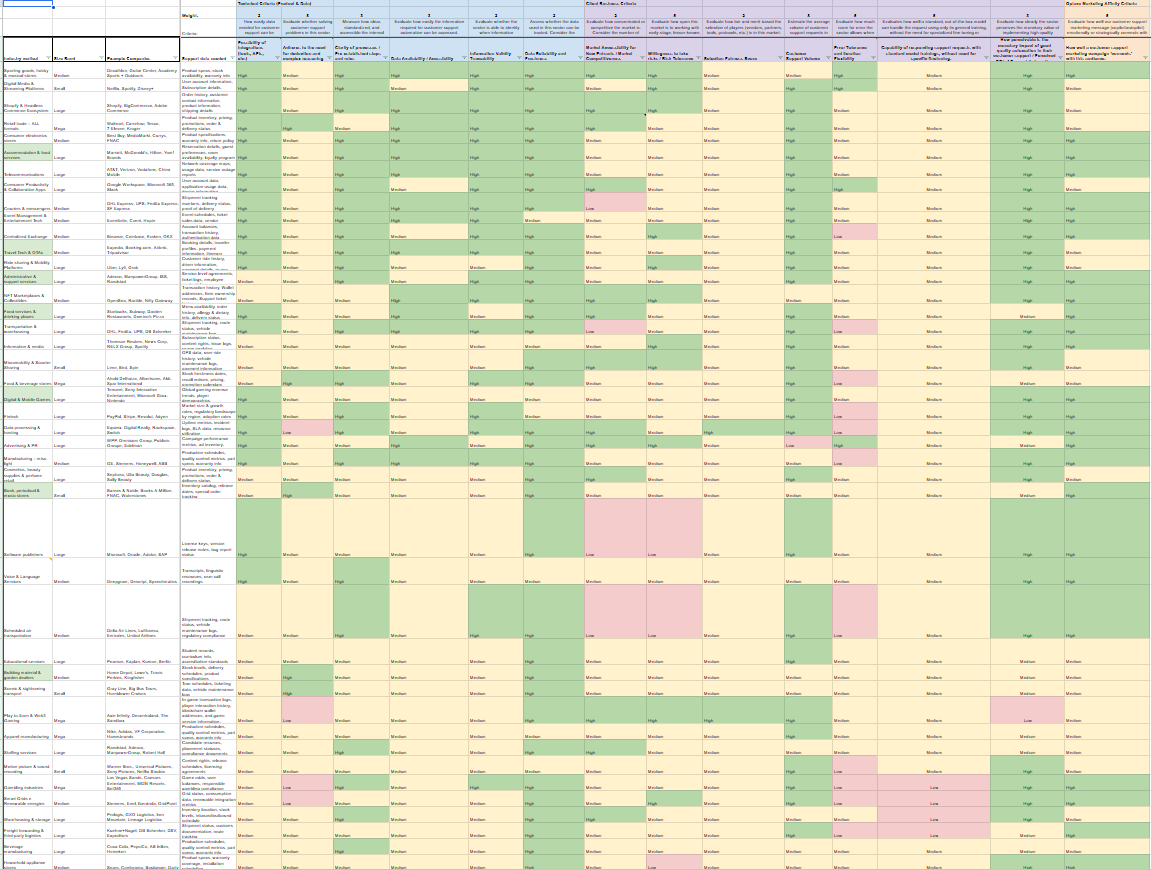
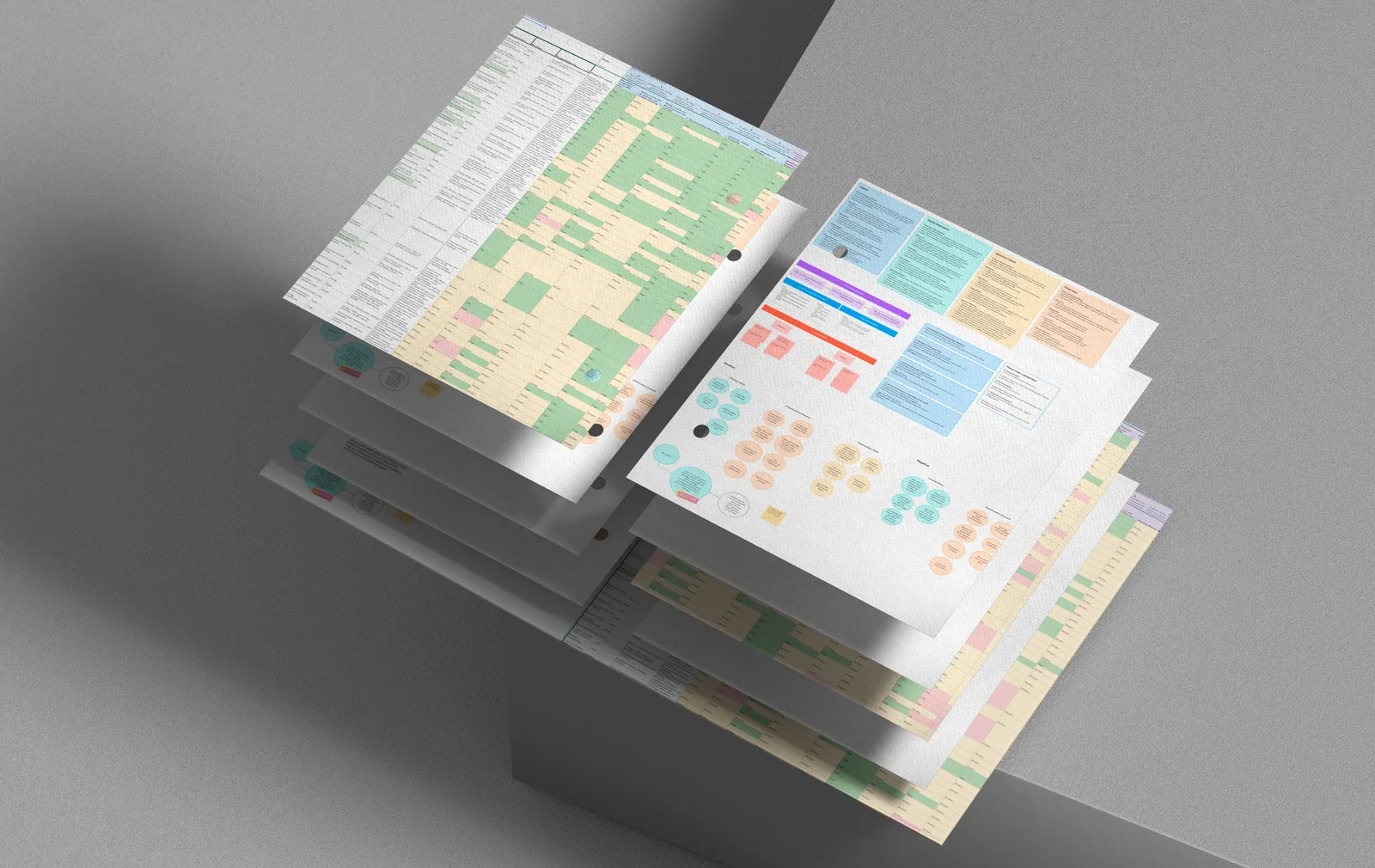
I built a weighted scoring system with 14 criteria applied to ~130 sectors. The real decision wasn't the scores — it was the weights: reasoning complexity weighs several times more than integration difficulty, because integration is an engineering obstacle that can be overcome, while complexity is a product limit. And "can we sell it" received a weight equal to "can we deliver it," consistent with the company's stage.

Weighted scoring table by criterion applied to market sectors
Weighted scoring system — 14 criteria applied to ~130 sectors

Impact

Two independent research tracks converging on the same conclusion about where AI delivers value — cross-validation of one model by the other.
~130 sectors classified into four tiers, with explicit, revisable criteria.
5 demo scenarios identified in sectors of low commercial priority, turning an invisible inconsistency into a conscious team decision.
Conceptual foundation for the high-fidelity prototype used in prospect conversations.
Sectors once "invisible" became major commercial targets.

Reflection

What I'd do differently

I built user behavior claims on a base of two informal interviews. The market model is rigorous and auditable; the user layer doesn't have the same backing, which creates a trust asymmetry between the two halves of the research. I would have capped the volume of scenarios until there was enough primary research to support them.

Next project

Analytics & Reports

Monitoring dashboard for a conversational AI assistant. I restructured more than 26 reports so each one answers a question and recommends an action.

Read the case →
See all projects →