← Back to work

Design Framework

An operational playbook connecting company strategy to daily product execution. Built from scratch, defining not the process itself, but the criteria for deciding how much process to apply.

Design opsProduct strategy
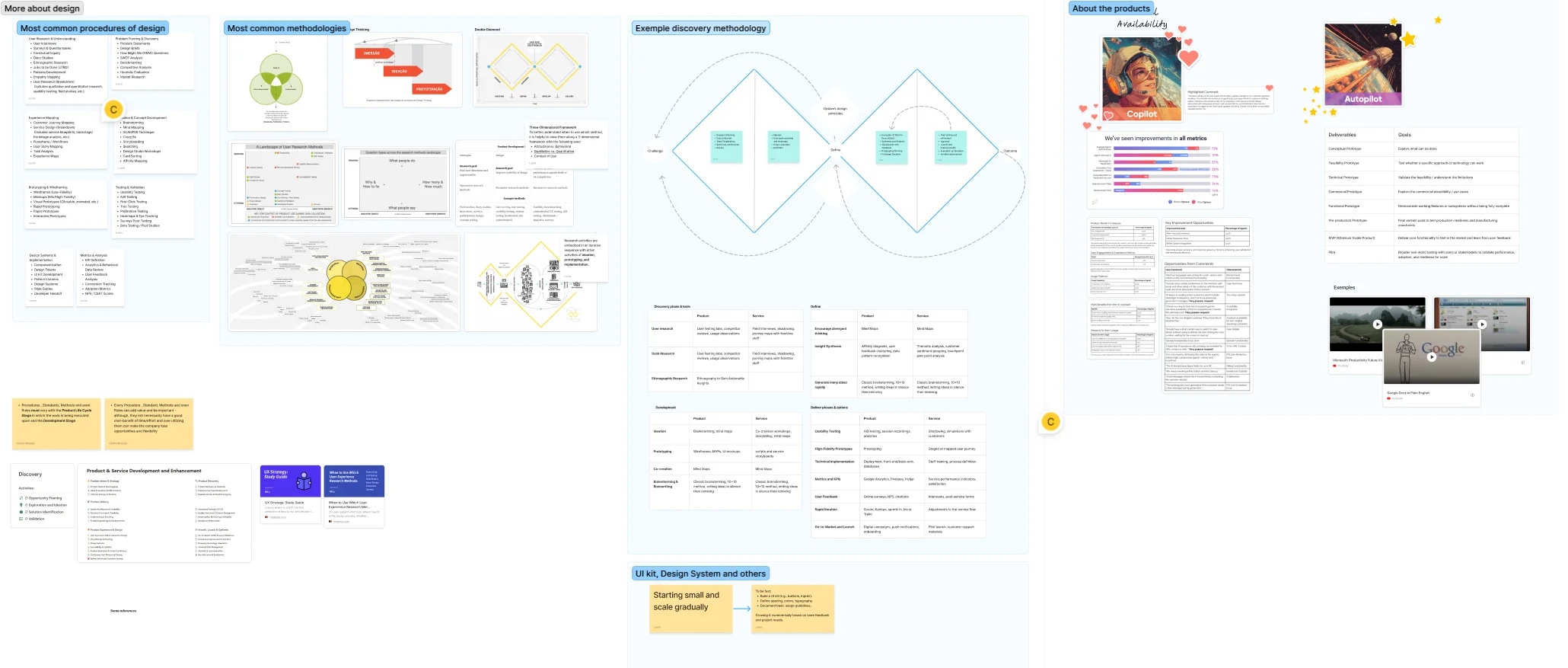
Reference material on design methodologies, discovery and product availability

The problem

Startups move at different speeds at different moments, and sometimes things need to happen in survival mode — there's no time for a full process. But with none at all, every task becomes a negotiation over what's good enough. The team spent time deciding twice: first arguing over how much rigor to apply, then executing. And since decisions were never recorded, context got lost between cycles. The obvious temptation was to write a standard process. But a fixed process in a company that swings between different levels of product maturity and delivery breaks — and freezes the work.

Design decisions

Process as a variable, not a standard

Instead of defining a single flow, I structured three axes that determine the rigor of each initiative: the company's moment (from crisis to steady state), the delivery stage (from concept to GA), and specific exception conditions. The team cross-references the three and knows what to do. I traded the predictability of a single process for one that survives changing context.
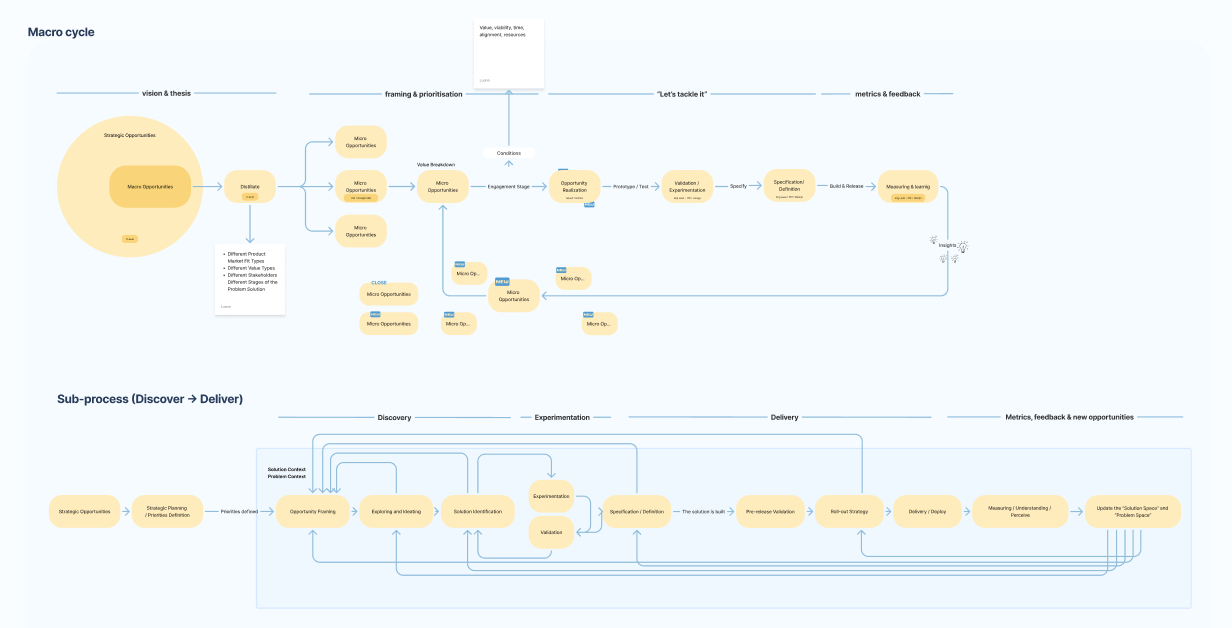
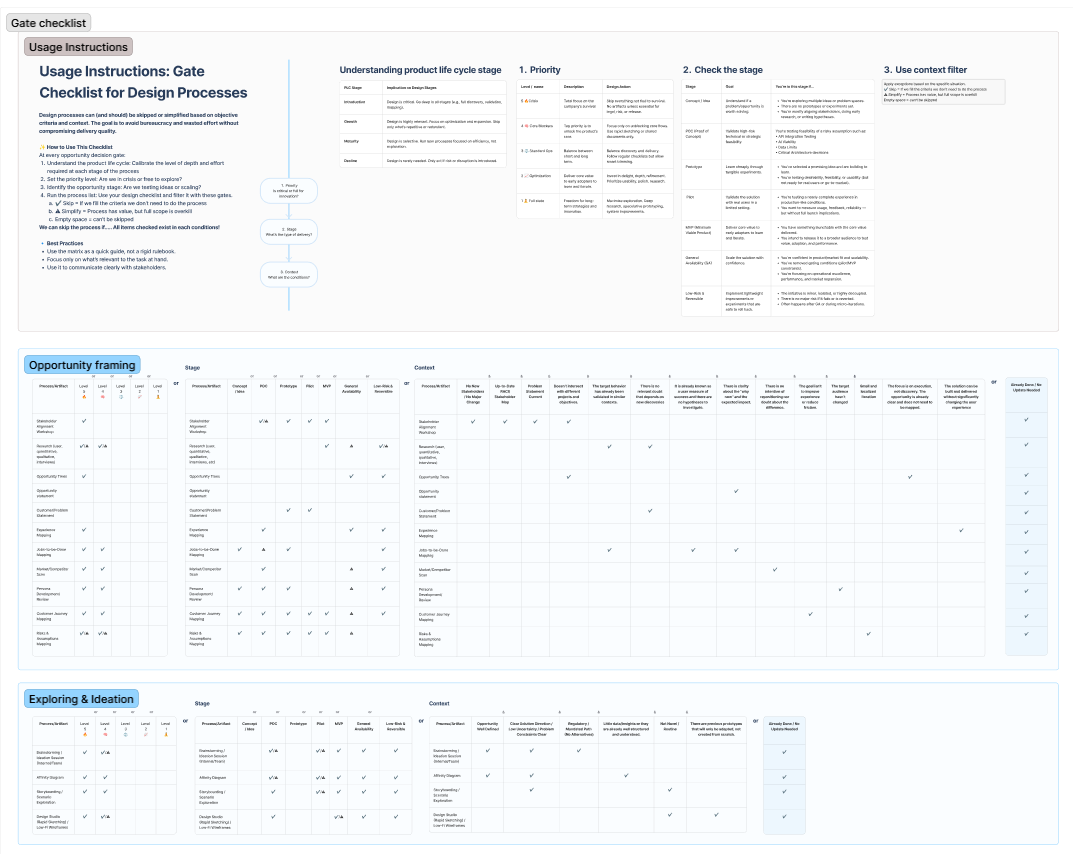
Diagram of the macro cycle and the Discover → Deliver sub-process
Macro cycle (vision, prioritization, execution, metrics) and the Discovery → Delivery sub-process

Documenting when not to

Design checklists usually list what's mandatory — which is exactly why they get ignored under pressure. I inverted it: the Gate Checklist marks, per artifact, under which conditions it's legitimate to skip or simplify. Cutting scope stopped being an informal shortcut and became a documented decision, with the criteria visible to whoever reviews it later.

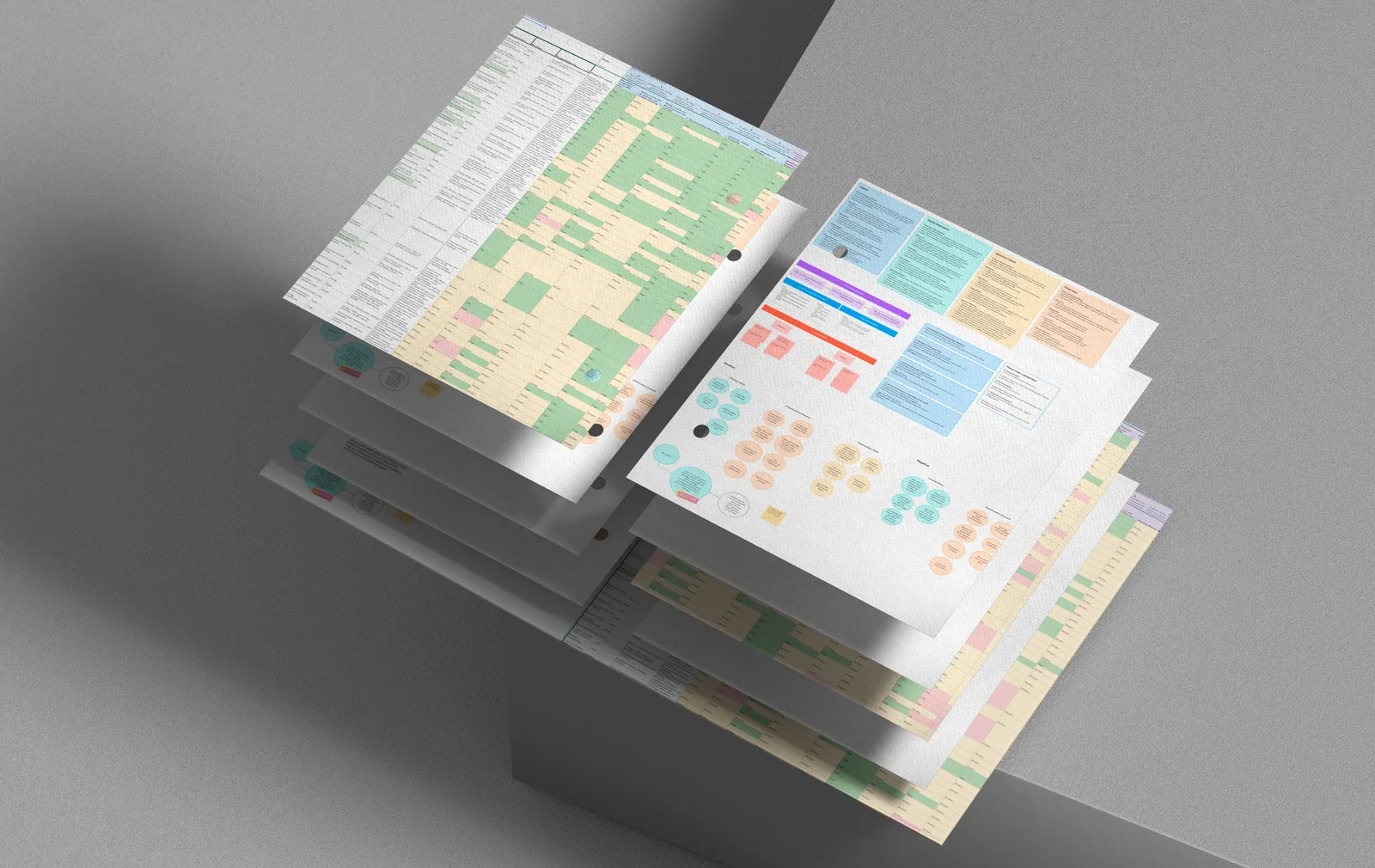
Gate Checklist with usage instructions and priority tables by stage
Gate Checklist — priority, stage and context criteria per artifact
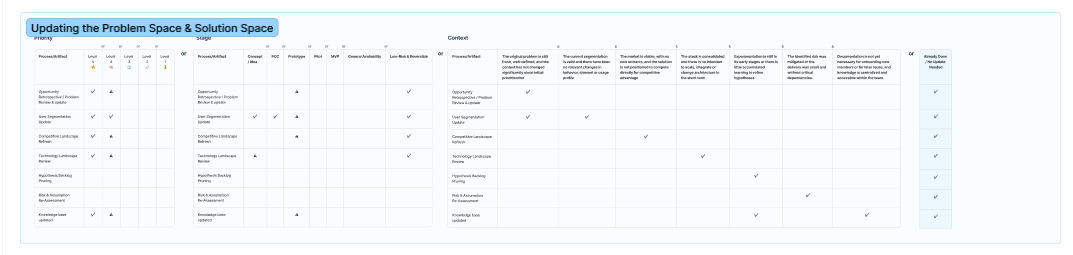
Problem space and solution space update table
Periodic review of the problem space and solution space, with context logged per process

Perceived value as an explicit criterion

Not every feature exists to move a usage metric. Corporate authentication, action traceability and permission controls, for example, exist because their absence costs the business: none of them move engagement metrics, but when the buyer is a company, their absence kills the deal at technical evaluation.

Rather than let this type of item compete for priority against engagement features under the same ruler, I created a category of its own with a declared approval condition. That ended a recurring argument between product and sales.

The solution

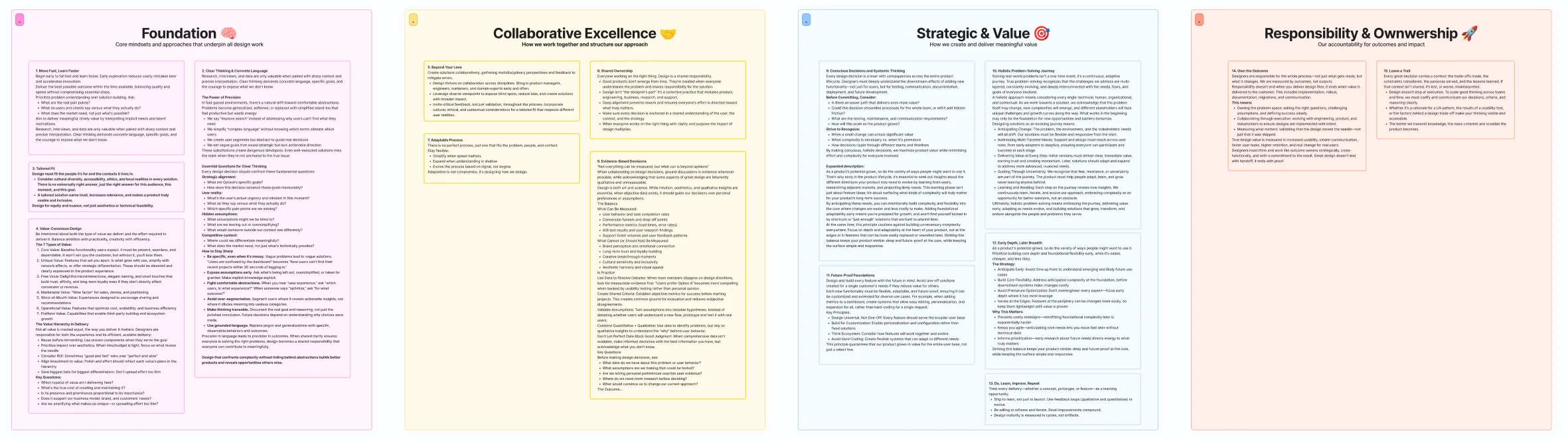
The framework's four pillars: Foundation, Collaborative Excellence, Strategic & Value, Responsibility & Ownership
Vision — design pillars
Next project

Product vision and market prioritization

Two parallel research tracks: the ideal concept for the AI assistant, and a quantitative model for prioritizing sectors. I cross-referenced the results to expose where the vision and the market disagreed.

Read the case →
See all projects →